Thermal hydraulics
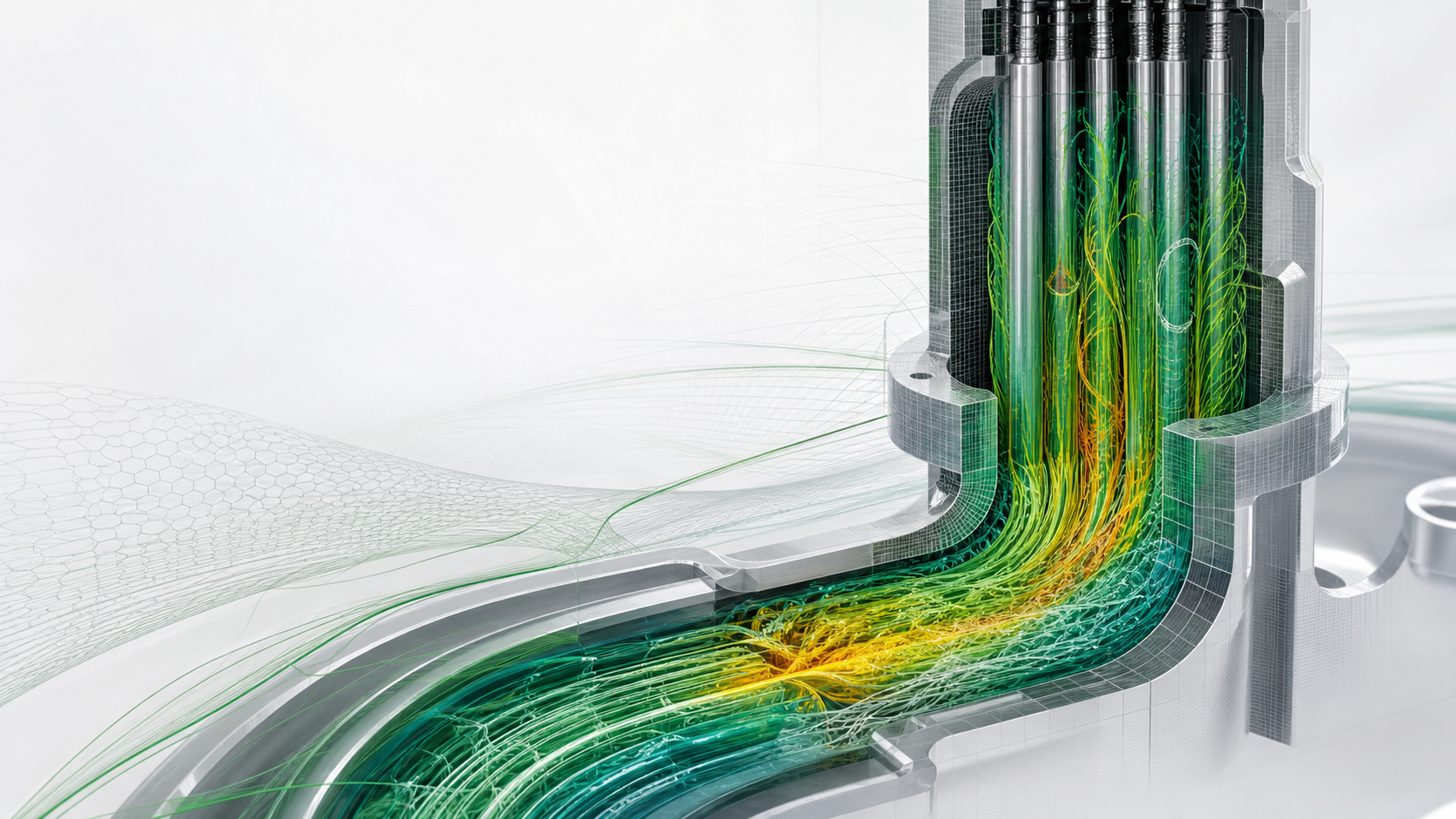
Simulation of heat transfer, flow behavior, and coupled transport phenomena in nuclear and high-energy systems.
Thermal Hydraulics / Multiphysics CFD
Dr. Ibrahim A. Jarrah is an associate R&D staff member at Oak Ridge National Laboratory, focused on advanced modeling and simulation for fusion, fission, and energy systems.
Profile
Dr. Jarrah works in thermal hydraulics within ORNL's Multiphysics CFD Applications group. His research centers on high-fidelity computational fluid dynamics, high-order numerical methods, parallel scientific code development, and nuclear system simulations for complex energy applications.
Before joining ORNL, he was a postdoctoral appointee in the Multiphysics Computation Section at Argonne National Laboratory. His technical background includes CFD code development, coarse-mesh and high-order methods, and Monte Carlo simulations for radiation transport and shielding.
Research
Simulation of heat transfer, flow behavior, and coupled transport phenomena in nuclear and high-energy systems.
High-fidelity CFD workflows for fusion, fission, gas turbine, and broader energy applications.
High-order, coarse-mesh, and nodal integral methods for complex geometries and transport equations.
Monte Carlo simulation, radiation transport, shielding, criticality, and spent fuel analysis.
Technical Toolkit
Project Background
Publications
Distributed-memory numerical framework for convection-diffusion problems.
FY25 theory and simulation performance target report for fusion reactor modeling.
Numerical method development for time-dependent incompressible flow problems.
High-fidelity CFD study of surface roughness effects in film cooling flow.
Extension of nodal integral methods to arbitrary geometries for convection-diffusion analysis.
Curvilinear-coordinate nodal integral methods for quadrilateral-element domains.
Time-dependent anisotropic transport modeling using nodal integral methods.
Recognition
Contact
Use the form for direct messages, or follow the public profile links for publications, identifiers, and institutional context.
Messages are sent directly to [email protected] once SMTP credentials are configured.